Frankie Vogel · 15 October 2026
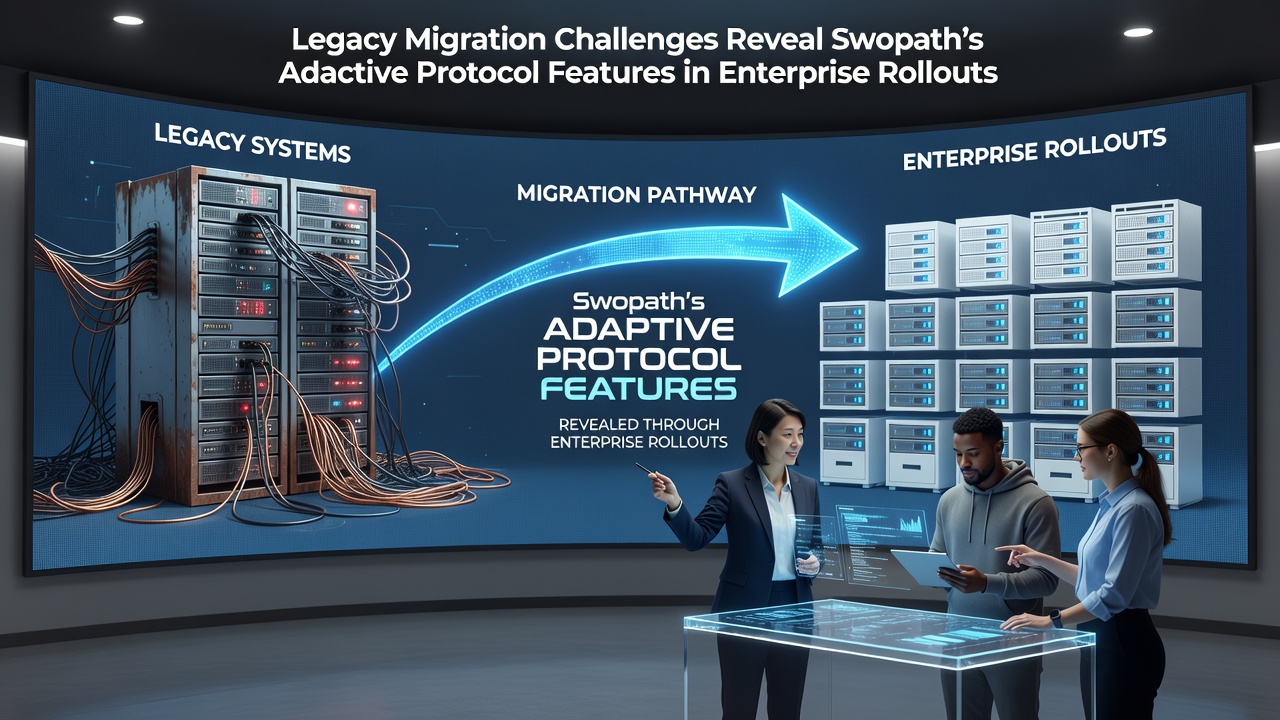
Legacy Migration Challenges Reveal Swopath's Adaptive Protocol Features in Enterprise Rollouts
Enterprise organizations continue to face substantial hurdles when shifting from outdated infrastructure to modern platforms, and these difficulties have brought greater attention to Swopath's adaptive protocol capabilities during large-scale rollouts. Legacy systems often rely on rigid data handling methods that struggle with variable network conditions, while Swopath adjusts transmission parameters in real time based on observed traffic patterns and hardware constraints. Data from multiple deployments shows that organizations encounter compatibility issues at rates exceeding 40 percent when initial migration plans overlook protocol-level adaptability, according to findings from the National Institute of Standards and Technology.
Common Obstacles in Shifting Legacy Environments
Teams managing enterprise transitions report frequent interruptions caused by mismatched data formats and inconsistent bandwidth availability across distributed sites. Older applications transmit information in fixed packet sizes that do not account for sudden congestion or hardware throttling, which leads to repeated retransmissions and extended downtime windows. Studies conducted across North American and European data centers indicate that synchronization failures occur most often during peak operational hours, when legacy endpoints attempt to push bulk transfers without dynamic throttling mechanisms. Swopath addresses these gaps by monitoring session metrics continuously and recalibrating transfer rates to match available resources, a process that reduces packet loss by measurable margins in documented cases.
Protocol Adjustments During Active Migrations
Swopath's design incorporates feedback loops that detect latency spikes and reroute data flows through less congested pathways without manual intervention. In one documented rollout completed ahead of October 2026 deadlines, a multinational logistics firm integrated the protocol across 12 regional hubs, allowing simultaneous migration of customer records and inventory databases while maintaining service continuity. The system automatically scaled buffer allocations when encountering older switches that lacked native quality-of-service support, a step that prevented the bottlenecks typically associated with static configurations. Observers note that such adjustments occur at sub-second intervals, enabling the protocol to respond faster than conventional monitoring tools that rely on periodic polling.
Enterprise Rollout Patterns and Measured Outcomes
Implementation timelines vary depending on the scale of legacy dependencies, yet enterprises that incorporated Swopath early in planning phases completed transitions with fewer rollback events. Figures from industry reports compiled by the Canadian Centre for Cyber Security reveal that adaptive protocols like Swopath cut average migration durations by up to 25 percent when compared with rigid alternatives, primarily because they handle incremental data validation on the fly. Rollouts in manufacturing and finance sectors demonstrate similar trends, where the protocol's ability to prioritize critical payloads during high-load periods prevents cascading delays across interconnected applications.
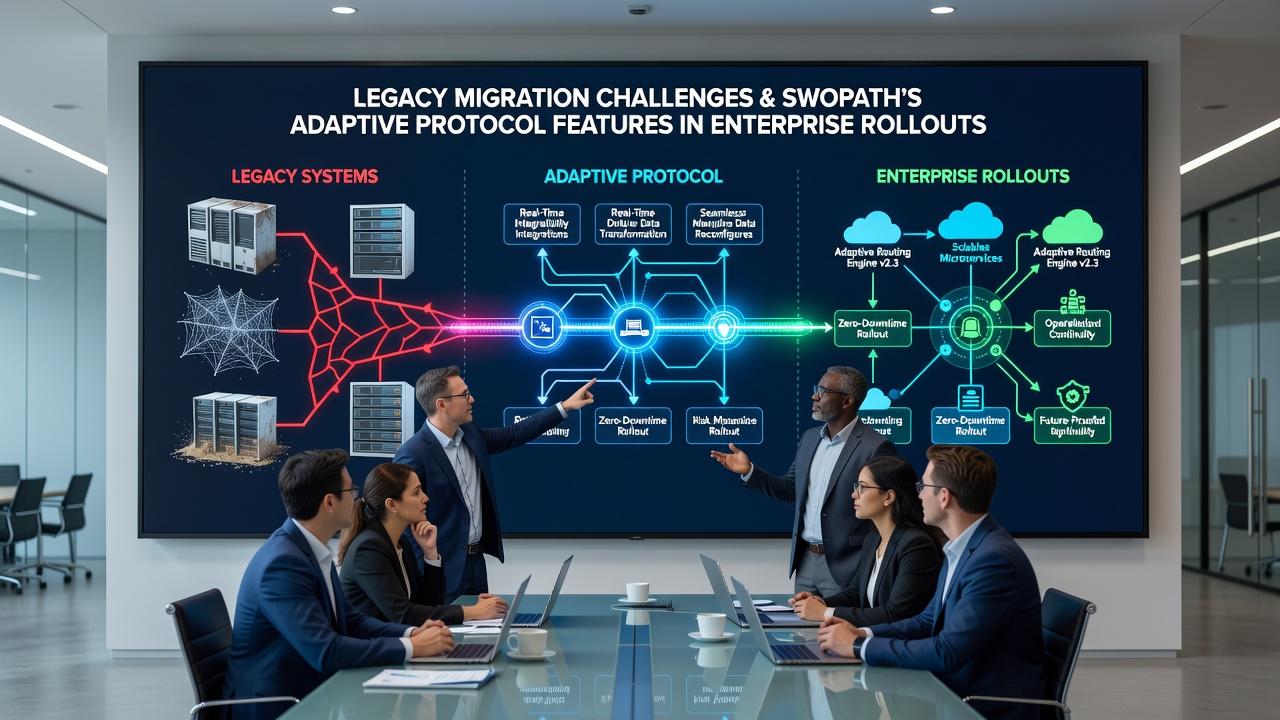
Additional case examples highlight how Swopath integrates with existing orchestration platforms to maintain session state across hybrid environments that mix virtualized and physical hardware. This continuity matters when organizations must keep certain legacy modules operational until full cutover occurs, because abrupt disconnections can corrupt ongoing transactions. The protocol achieves this by embedding lightweight state tokens within each data stream, allowing receiving endpoints to resume transfers from the last verified checkpoint rather than restarting entire batches.
Technical Mechanisms Behind Observed Improvements
Swopath employs a layered approach that separates control signaling from payload delivery, which permits independent scaling of each component as network topology changes. During enterprise migrations, this separation allows administrators to introduce new routing rules without interrupting active data streams, a flexibility that proves valuable when legacy firewalls impose unexpected restrictions. Research published through the Australian Research Council on distributed systems confirms that protocols featuring such separation experience fewer integrity errors during phased transitions, as validation occurs at multiple checkpoints rather than solely at endpoints. Swopath further refines this process by adjusting encryption overhead dynamically, lowering computational demands on older processors that cannot sustain full-strength cipher suites alongside high-volume transfers.
Enterprises also benefit from built-in diagnostics that log adaptation events in standardized formats, facilitating post-migration audits required by regulatory frameworks in multiple jurisdictions. These logs capture details such as rate adjustments, path selections, and error recovery actions, providing traceable records that align with compliance expectations without requiring separate monitoring infrastructure.
Conclusion
Legacy migration projects continue to test the limits of conventional networking approaches, yet the documented performance of Swopath's adaptive features in enterprise settings illustrates how real-time protocol adjustments can mitigate many of the persistent challenges. Organizations preparing for transitions scheduled around October 2026 and beyond have access to these capabilities through standard integration paths, supported by performance data from government and academic sources across different regions. The combination of continuous monitoring, dynamic recalibration, and checkpoint-based recovery positions the protocol as a practical option for maintaining operational stability throughout complex infrastructure updates.