Blake Fischer · 17 September 2026
Analyzing Synchronization Protocols for Cross-Platform Data Transfers in Advanced Swopath Configurations
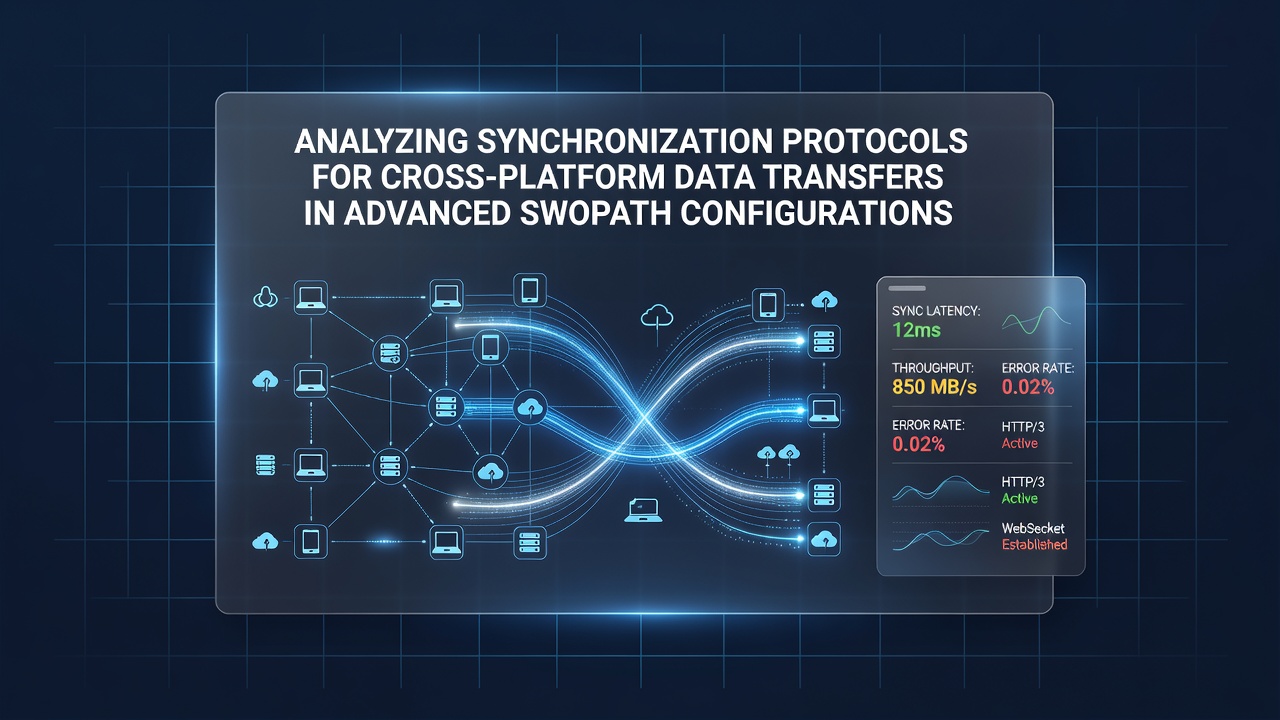
Advanced Swopath configurations rely on precise synchronization protocols to manage data transfers across multiple platforms, and researchers continue to examine how these systems maintain consistency under varying loads. Data from recent technical reviews shows that protocols such as those based on delta encoding and timestamp reconciliation handle conflicts more effectively when network latency spikes occur, while checksum verification layers add another barrier against corruption during transit.
Experts at institutions studying distributed systems note that Swopath setups often integrate both push and pull mechanisms, allowing nodes to exchange updates without requiring constant central oversight. This approach reduces bottlenecks, yet it demands careful alignment of clock sources across devices that run different operating environments. Figures from industry reports indicate that platforms using hybrid synchronization models achieve lower error rates during large-scale transfers compared with purely event-driven alternatives.
Core Components of Swopath Synchronization
Within these configurations, protocol stacks typically include sequence numbering, version vectors, and conflict-resolution algorithms that operate in tandem. Observers note that sequence numbers track the order of operations, whereas version vectors help identify which replica holds the most recent changes. When two platforms attempt simultaneous updates, resolution logic compares metadata to determine the prevailing state without manual intervention.
Studies conducted by academic groups in North America highlight how vector clocks scale better in environments with dozens of participating nodes, and engineers often combine them with Merkle trees for efficient state comparison. Such combinations allow quick detection of differences, after which only modified blocks move across the network instead of entire datasets.
Challenges in Cross-Platform Environments
Cross-platform transfers introduce variables that single-environment setups rarely encounter, including differences in file system semantics, encoding standards, and security policies. Data indicates that mismatches in timestamp precision between Windows and Unix-based systems can trigger unnecessary retransmissions unless protocols normalize time references early in the exchange. Research teams working with European partners have documented cases where endianness variations in binary data led to silent corruption before proper byte-order handling became standard practice.
Security considerations add another layer, since encryption overhead must balance against transfer speed. According to guidelines published by the National Institute of Standards and Technology, protocols that support end-to-end encryption while preserving synchronization metadata reduce exposure during transit. Implementations that offload key management to hardware modules show measurable improvements in throughput when handling encrypted payloads across heterogeneous hardware.
Performance Metrics and Evaluation Methods
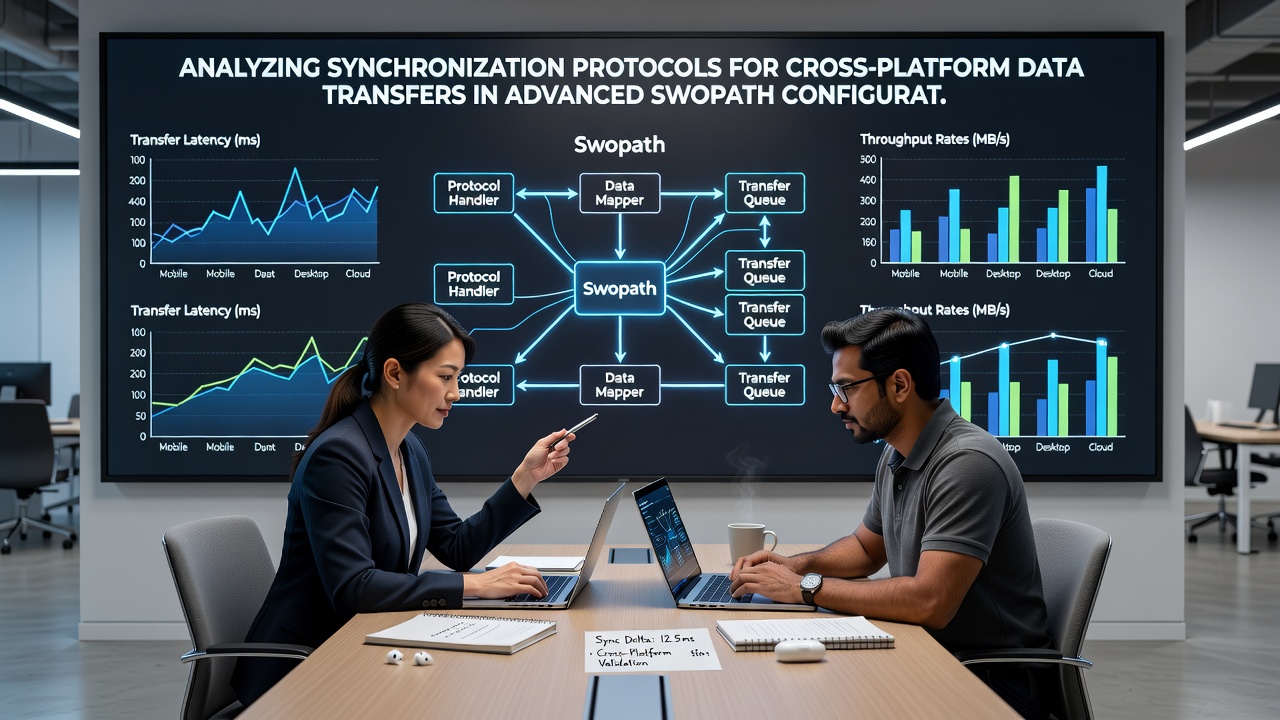
Performance evaluations typically measure latency, throughput, and consistency guarantees under simulated failure conditions. Teams running benchmarks report that protocols incorporating adaptive batching adjust packet sizes based on current bandwidth, which helps maintain steady progress even when connections degrade. Those who have tested Swopath configurations under controlled packet-loss scenarios observe that selective retransmission of only the affected segments outperforms full-file retries in most measured cases.
Monitoring tools integrated into these systems collect telemetry on sync lag and conflict frequency, providing operators with actionable insights. Australian research institutions have contributed datasets showing seasonal patterns in network congestion that affect synchronization windows, prompting administrators to schedule bulk transfers during lower-traffic periods.
Developments Expected Around September 2026
Industry observers anticipate that several protocol extensions will reach maturity by September 2026, particularly those addressing quantum-resistant cryptographic primitives for long-term data integrity. Working groups within the Internet Engineering Task Force continue refining draft specifications that embed post-quantum signatures into existing synchronization headers without inflating message sizes excessively. Early test deployments suggest these additions integrate cleanly with current Swopath frameworks when backward compatibility layers remain active.
Parallel efforts focus on improving support for edge computing nodes that join and leave clusters dynamically. Preliminary results shared at technical conferences indicate that gossip-based dissemination combined with eventual consistency models can accommodate such churn while keeping divergence windows brief.
Conclusion
Analysis of synchronization protocols for cross-platform data transfers in advanced Swopath configurations reveals a landscape shaped by ongoing refinements in conflict detection, security integration, and adaptive performance tuning. Continued collaboration across regions supplies the diverse test cases needed to validate these systems under real-world conditions, and upcoming milestones around September 2026 promise further standardization in areas such as post-quantum protection and edge-node resilience.